

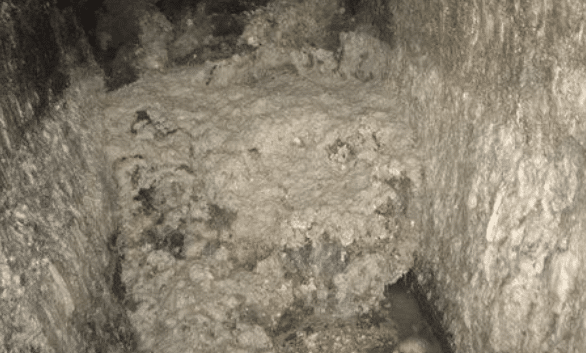
In 2017, a 130-tonne fatberg was pulled from the sewers beneath Whitechapel in east London. It took nine weeks to break apart and remove.
These are the fatbergs that make the news. But for every monster fatberg that gets a headline, thousands of smaller ones are quietly forming in commercial drainage systems across the UK, causing blockages, flooding, and prosecution for the businesses responsible.
The good news is that fatbergs are entirely preventable.
If your business manages its fats, oils, and grease properly, maintains its grease traps, and trains its staff on what can and can’t go down the plughole, you won’t end up paying for an emergency call-out to clear a congealed mass of cooking fat and wet wipes from your drainage system.
What is a fatberg?
A fatberg is a solid mass that forms inside sewer pipes and drains when fats, oils, and grease (FOG) combine with non-biodegradable items like wet wipes, sanitary products, nappies, and cotton buds.
The FOG cools and solidifies as it travels through the drainage system, sticking to pipe walls and trapping anything else that passes through.
Over time, the mass grows until it partially or completely blocks the pipe.
The name comes from the obvious comparison to an iceberg, and the analogy works.
What you see at the surface is a fraction of what’s building up underground.
Research into fatberg composition shows that the material is primarily cooking fat. The rest can be made up of wipes, sanitary items, and other non-flushable waste that acts as a scaffold for the grease to solidify around.
Why fatbergs are a serious problem for businesses
Fatbergs aren’t just a water company problem. If a fatberg forms in your private drainage system, or if FOG from your business causes a blockage in the public sewer, you’re liable.
The financial cost
UK water companies spend millions of pounds every year dealing with fatbergs and sewer blockages caused by FOG.
When the blockage traces back to a specific business, the water company can recover those costs from you.
Add emergency drain clearing, potential drain jetting, repair work if the pipe has been damaged, and lost trading time while the drainage is out of action, and a single fatberg incident can cost a commercial kitchen thousands of pounds.
Legal consequences
Water companies can prosecute businesses that cause damage to the sewer network.
Environmental Health officers can also take action against food businesses that fail to manage FOG waste. Fines are significant, and repeated offences can result in enforcement notices that restrict your ability to operate.
For restaurants, pubs, and hotels, a drainage prosecution also creates problems with licensing and insurance renewals.
Disruption to your business
A blocked drain in a commercial kitchen forces you to stop cooking.
If the blockage causes flooding or sewage backup, you may need to close entirely until the problem is resolved and the area is cleaned and sanitised.
For food businesses, Environmental Health may require evidence that the issue has been properly addressed before you can reopen.
What causes fatbergs to form?
Fatbergs need two things to form. FOG going down the drain, and non-biodegradable items to bind with.
Cooking fats, oils, and grease poured down sinks
This is the primary cause. Liquid cooking oil goes down the drain hot, but it cools and solidifies as it moves through the pipework.
Butter, lard, meat fat, and oil from deep fryers all behave the same way. Even small amounts add up.
A busy commercial kitchen producing three or four services a day can coat its drain walls with a significant layer of grease in just a few weeks.

Wet wipes and sanitary products flushed down toilets
Despite packaging that says “flushable,” wet wipes don’t break down in water the way toilet paper does. They pass through the toilet but catch on any roughness or joint in the pipework downstream.
Combined with FOG, they form the fibrous structure that holds a fatberg together.
Sanitary towels, nappies, and cotton buds cause the same problem.
Food waste washed into drains
Scraping plates directly into sinks, washing food prep waste down the plughole, and failing to use drain strainers all contribute FOG and solid material to the drainage system. In a busy kitchen, the volume of food waste reaching the drains can be substantial even when staff think they’re being careful.
Poorly maintained or missing grease traps
A grease trap that hasn’t been emptied in months is worse than no grease trap at all, because it gives a false sense of security while FOG flows straight past the saturated trap and into the drainage system.
How to prevent fatbergs in your business
Fatberg prevention comes down to stopping FOG and non-biodegradable waste from entering your drainage system. Here’s what actually works.
Install and maintain grease traps
If your business produces food, a grease trap (also called a grease interceptor) is a legal requirement in most cases. The trap sits between your kitchen drainage and the main sewer connection, capturing FOG before it enters the pipe network.
But a grease trap only works if it’s emptied regularly.
We recommend grease trap cleaning every four to six weeks for busy commercial kitchens, with less frequent schedules for lower-volume sites. We fully inspect the condition of you grease trap and drains to advise on the right frequency for your operation.
Collect and dispose of cooking oil properly
Every commercial kitchen should have a used cooking oil collection point. Let oil cool after use, pour it into a sealed container, and arrange collection by a licensed waste oil recycler.
Never pour cooking oil, fat, or grease down any drain, even if you have a grease trap fitted. The trap is a safety net, not a substitute for proper disposal.
Use drain strainers on all sinks
Simple mesh strainers on kitchen sinks catch food particles before they enter the drainage. They cost almost nothing and prevent a surprising amount of solid waste from reaching your pipes.
Empty them into the food waste bin after each service.
Train your staff
Your kitchen staff are the first line of defence against fatbergs. If they don’t know what causes fatbergs or why it matters, they won’t change their habits.
Make sure to train them on:
- what can and can’t go down the drains
- how to dispose of FOG correctly
- how to use and empty drain strainers
- what happens to the business if a fatberg forms
Make it part of your induction for new starters and refresh it annually.
Put up signage
Clear signs above sinks and in staff and customer toilets reminding people what not to put down the drain. “No wet wipes,” “No cooking oil,” “No food scraps” are simple messages that work when they’re visible in the right places.
Consider enzyme drain dosing
Automated drain dosing systems release a measured amount of enzyme-based solution into your waste pipes at set intervals. The enzymes break down FOG residue before it solidifies, reducing the buildup that leads to fatbergs.
Dosing systems aren’t a replacement for grease traps and proper disposal, but they add an extra layer of protection, particularly for high-volume kitchens where some FOG inevitably reaches the drains despite best practices.
Schedule regular drain maintenance
Even with grease traps, proper disposal, and trained staff, some FOG will reach your drainage system over time.
Scheduled drain maintenance that includes high-pressure jetting clears any buildup before it reaches fatberg levels.
Most commercial kitchens benefit from quarterly jetting visits, though busier operations may need monthly attention.
A CCTV drain survey once a year shows you the condition of your pipes and confirms whether your prevention measures are working.

Signs a fatberg may be forming in your drains
Catching a fatberg early is far cheaper than dealing with a full blockage. Watch for these warning signs.
- Drains that are noticeably slower than usual, particularly kitchen sinks and floor drains
- Recurring blockages in the same drain, even after clearing
- Foul or greasy smells coming from drains, manholes, or inspection chambers
- Gurgling sounds from drains when water is running
- Visible grease around drain openings, gullies, or external manholes
If you notice any of these, don’t wait for a complete blockage. Call a drainage professional to inspect and clean the system before the problem escalates.
What to do if you already have a fatberg
If your drains have already blocked or you suspect a fatberg has formed, you need professional help.
Pouring chemicals down the drain won’t dissolve a solidified mass of fat and wipes, and DIY rodding will only punch a temporary hole through the blockage without removing it.
A professional drainage company will start with a CCTV survey to locate and assess the fatberg, then use high-pressure drain jetting to break it apart and flush it from the system. For larger fatbergs in main drainage runs, vacuum tanker extraction may be needed to remove the material from site. Once the fatberg is cleared, a follow-up CCTV survey confirms the pipe is clean and checks for any damage the blockage may have caused.
After removal, the priority is making sure it doesn’t happen again.
That means reviewing your FOG management, servicing or upgrading your grease trap, and setting up a commercial drainage maintenance schedule that keeps your system clean between professional visits.
Prevention costs a fraction of the cure
A grease trap service every few weeks, quarterly drain jetting, and basic staff training cost a fraction of what a single fatberg incident costs to resolve.
When you factor in emergency call-out charges, lost trading hours, potential fines from the water company, and the reputational damage of a drainage-related closure, prevention isn’t just cheaper. It’s the only approach that makes business sense.
If you’re not sure whether your current FOG management is doing enough, or if you haven’t had your commercial drains surveyed recently, call us on 0141 280 3431 for a free assessment.
We’ll check your grease traps, survey your drainage system, and recommend a maintenance schedule that keeps fatbergs out of your pipes and your business out of trouble.
