


When a drain blocks, the question isn’t usually whether it needs clearing but how. Two methods dominate drain unblocking in the UK: mechanical snaking (pushing a cable or rods through the blockage to break it up) and high-pressure water jetting (blasting the blockage apart and cleaning the pipe walls). Both work, but they’re suited to very different situations, and choosing the wrong one can leave you with a pipe that blocks again within weeks.
If you’ve got a slow-draining sink, a backed-up toilet, or standing water in an outside drain, understanding the difference between the two methods helps you decide whether to reach for a set of drain rods yourself or call in a professional with a jetting rig. Here’s how they compare.
What is a drain snake?
A drain snake (also called a drain auger or, in the UK, drain rods) is a mechanical tool that physically pushes through or breaks apart a blockage inside a pipe. The simplest version is a set of flexible rods that screw together end to end and get pushed into the pipe from an access point, with a corkscrew or plunger attachment on the front that either hooks the blockage and pulls it back or pushes it through.
Professional drain engineers use powered versions, motorised cables with a rotating cutting head that can chew through tougher obstructions like compacted grease, tree roots, or hardened scale. The motor spins the cable while the operator feeds it into the pipe, and the cutting head does the work of breaking the blockage apart so the debris can wash away downstream.
Drain snakes are a direct, targeted tool. You push the snake to the blockage, break it up, and withdraw. It’s quick, it’s mechanical, and for straightforward blockages it gets the pipe flowing again within minutes. The limitation is that it only clears the immediate obstruction. The snake creates a hole through the blockage, but it doesn’t scrub the pipe walls or remove the build-up that caused the problem in the first place.
What is a drain jetter?
A drain jetter (or hydro jetter) uses high-pressure water to blast through blockages and scour the inside of the pipe clean. A professional jetting machine pumps water at pressures between 3,000 and 5,000 PSI through a flexible hose fitted with a specialised nozzle. The nozzle has forward-facing jets that bore through the blockage and rear-facing jets that clean the pipe walls as the hose travels through the system.
The result is a pipe that’s not just unblocked but genuinely clean, with grease, scale, silt, and debris stripped from the walls and flushed downstream. Because the jets spray in all directions, jetting delivers a 360-degree clean rather than just punching a hole through the middle of the blockage. This is why jetting is often used as a preventive maintenance tool as well as a reactive one: it restores the pipe to something close to its original capacity, which means blockages are less likely to recur.
Jetting equipment ranges from small, portable units that run off a standard water supply to large, van-mounted rigs with their own water tanks and industrial pumps. The size of the equipment depends on the pipe diameter, the severity of the blockage, and how far into the system the jetter needs to reach.
How they compare
Effectiveness
For a simple, localised blockage (a clump of hair, a build-up of toilet paper, or a single obstruction close to the access point), a drain snake does the job quickly and effectively. For anything more serious, such as fat and grease build-up along a long section of pipe, tree root intrusion, or a recurring blockage that keeps coming back in the same spot, jetting is the more effective method because it removes the underlying build-up rather than just poking a hole through it.
Think of it this way: a snake treats the symptom, jetting treats the cause. If your drain has blocked once and you can see the problem through the access point, snaking or rodding may be all you need. If it’s blocked three times this year and you can’t work out why, jetting will clear the build-up that’s been gradually narrowing the pipe and causing repeated problems.
Pipe condition
This is where the choice gets more nuanced. Jetting at high pressure is safe for modern plastic pipes and well-maintained clay pipes, but it can damage pipes that are already cracked, corroded, or structurally weakened. Older properties with original clay pipes, cast iron pipes, or pitch fibre pipes need a more cautious approach. A good drainage engineer will always assess the pipe condition (ideally with a CCTV drain survey) before jetting at full pressure to make sure the pipe can handle it.
Drain snakes are gentler on the pipe structure. The mechanical action of rods or a cable doesn’t exert pressure on the pipe walls the way water at 4,000 PSI does, which makes snaking the safer option for fragile or deteriorating pipework where there’s a risk of causing further damage.
Speed
Both methods are fast for straightforward blockages. A drain snake can clear a simple obstruction in 15 to 30 minutes. Jetting takes a similar amount of time for the blockage itself, but because it cleans the full length of pipe, a thorough jetting job might take an hour or so as the operator works the hose through the system. The extra time is well spent if the goal is to prevent the problem from returning rather than just getting the drain flowing again today.
Cost
A set of DIY drain rods from a hardware shop costs between £20 and £50. If you can reach the blockage from an outside inspection chamber and the obstruction isn’t too severe, it’s the cheapest option available. For anything beyond a basic rod-and-plunger job, you’re looking at calling a professional.
Professional drain rodding or snaking typically costs between £80 and £150 in the UK. Professional high-pressure jetting costs between £100 and £300, depending on the severity of the blockage, the length of pipe that needs cleaning, and whether a CCTV survey is included. The higher cost of jetting reflects the specialist equipment involved and the more thorough result you get, and for recurring blockages the investment usually pays for itself by breaking the cycle of repeat call-outs.
Mess
Drain rods are messy. You’re physically pushing and pulling waste material through the pipe, and what comes back on the rods (and out of the access point) can be unpleasant. Jetting is generally cleaner because the water flushes debris downstream rather than pulling it back towards you, though there can be splash-back at the access point. Either way, rubber gloves and old clothes are advised.
When to use a drain snake
A drain snake or set of rods is the right tool when the blockage is straightforward and you can reach it from an accessible point. Common situations where snaking works well include:
- A single, localised blockage in an outside drain (leaves, debris, a build-up of tissue)
- A blocked toilet or kitchen sink where the obstruction is within reach of a short snake or plunger
- Older properties with fragile pipes where high-pressure jetting carries a risk of damage
- A first-time blockage where there’s no history of recurring problems
- Quick, temporary relief while you wait for a professional to address a more serious underlying issue
DIY drain rods are a reasonable option for simple outside drain blockages, provided you can access the pipe through an inspection chamber and you’re comfortable with the process. Push the rods in the direction of flow, turn them clockwise (never anticlockwise, or the rods can unscrew and you’ll lose a section in the pipe), and work steadily until you feel the blockage give way.
When to use a jetter
Jetting is the professional’s tool of choice for most drain blockages, and there’s a reason for that. It clears the immediate problem and cleans the pipe, which is the closest thing to a long-term fix you can get without physically replacing the pipework. Situations where jetting is the better option include:
- Recurring blockages that keep coming back in the same section of pipe
- Fat, grease, and soap build-up (common in kitchen drains) that has coated the inside of the pipe and narrowed the bore
- Tree root intrusion at pipe joints, where roots have grown into the pipe and are catching debris
- Long pipe runs where rods can’t reach or would be too cumbersome
- Commercial kitchens and restaurants where grease build-up is rapid and regular cleaning is needed
- Preventive maintenance to keep drains flowing freely before a blockage develops
Clark Drainage uses high-pressure jetting as the standard method for most drain unblocking jobs because the results are more thorough and longer-lasting than rodding alone. Our engineers carry jetting equipment on every van, which means the drain gets a proper clean rather than a quick poke-through, and you’re less likely to need a second visit for the same problem.
Can you DIY or should you call a professional?
For a straightforward outside drain blockage, DIY rodding is worth a try before calling anyone. A set of drain rods, a pair of rubber gloves, and 20 minutes of work can often clear a simple obstruction and save you a call-out fee.
Call a professional when the rods don’t work, when the blockage keeps coming back, when you can’t identify the cause, or when the problem is inside the house in pipes you can’t easily access. Professional drainage engineers have powered snakes, jetting rigs, and CCTV cameras that can diagnose and fix problems that are beyond the reach of a set of drain rods.
You should also call a professional if you suspect the blockage is caused by something structural, like a collapsed pipe, a displaced joint, or tree root damage. Rodding or jetting will clear the immediate blockage, but the underlying problem needs a proper repair. A CCTV drain survey after the blockage is cleared will show whether the pipe is damaged and needs further work.

The role of a CCTV survey
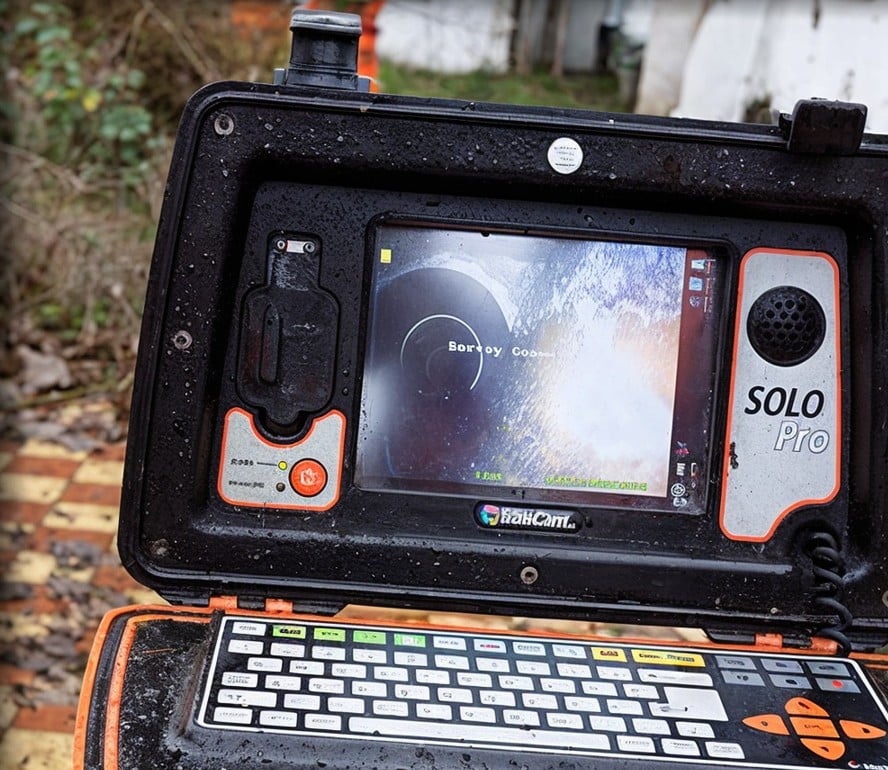
One thing that separates a professional drain clearing job from a DIY attempt is diagnosis. A CCTV survey sends a camera through the pipe after clearing, showing exactly what caused the blockage and whether there’s any damage that needs addressing. Without a survey, you’re guessing. The blockage might have been caused by a one-off build-up that won’t happen again, or it might be a symptom of a cracked pipe, a displaced joint, or a section of pipe that’s lost its gradient and traps waste every time.
Knowing the cause changes what you do next. If the pipe is sound, jetting has probably solved the problem. If the camera reveals damage, you can plan a repair before the next blockage hits, which is almost always cheaper than dealing with an emergency when a damaged pipe finally gives up completely.
Frequently asked questions
Will a drain snake damage my pipes?
A hand-operated set of drain rods is unlikely to damage a pipe in reasonable condition. Powered drain snakes with cutting heads can scratch the inside of plastic pipes if used aggressively, but a competent operator will match the tool to the pipe material. The main risk with DIY rods is unscrewing a section inside the pipe (always turn clockwise) or pushing the blockage further into the system rather than clearing it.
How often should drains be jetted?
For most domestic properties, jetting when a problem occurs is sufficient. If you have a history of recurring blockages, annual or bi-annual jetting can prevent build-up from reaching the point where it causes a full blockage. Commercial kitchens and restaurants should schedule regular jetting, often quarterly, to manage grease and food waste build-up in their drainage.
Is jetting safe for old pipes?
It depends on the pipe’s condition. A drainage engineer should inspect the pipe (ideally with CCTV) before jetting old clay or cast iron pipes at full pressure. If the pipe is cracked or structurally weakened, the pressure can cause further damage. A skilled operator can adjust the pressure and nozzle type to suit the pipe, but if there’s any doubt, a gentler approach with rods or a lower-pressure flush may be safer.
Can I hire a jetting machine?
Small, portable jetting units are available for hire from tool hire shops, typically producing around 2,000 to 3,000 PSI. They can handle minor blockages in domestic drains, but they don’t match the power or reach of a professional van-mounted unit. If the blockage doesn’t shift with a hired machine, or if you’re not confident working with high-pressure equipment, call a professional rather than persisting and potentially causing damage.
What’s the difference between drain rods and a drain snake?
Drain rods are rigid sections that screw together and are pushed manually into the pipe. A drain snake (or auger) is a flexible cable, often powered by a motor, that can navigate bends and reach further into the system. Rods are the more common DIY tool in the UK; powered snakes are typically used by professionals. Both achieve the same basic objective of physically breaking through or removing the blockage.
Getting your drains cleared properly
Whether your drain needs a quick rod through or a full high-pressure jetting clean, Clark Drainage can help. We carry out drain jetting, drain cleaning, and CCTV drain surveys across the UK, and our engineers will recommend the right method for your specific blockage rather than applying a one-size-fits-all approach.
Call us on 0800 085 1219 for a free quote, or visit our contact page to book a visit.
