

Clark Drainage provides specialist drain root cutting services to domestic and commercial properties across the UK.

The drain keeps blocking.
You’ve had it jetted twice already, and each time it clears for a few weeks before the same problem comes back. And from the CCTV survey, it is easy to see why.
Tree roots have forced their way into the pipe through a cracked joint, and invading roots are growing back faster than jetting alone can manage.
Root cutting solves this completely. For more information, reach out to our professional team at Clark Drainage today.
What is drain root cutting?
Drain root cutting is a no-dig technique for removing tree roots that have grown into drainage pipes and sewers, causing drain root intrusion that blocks water flow and damages the pipe structure.
Rather than excavating the pipe to access the roots from outside, our drainage engineers work from inside the pipe using remote-controlled root cutter equipment that enters through a manhole or inspection chamber and cuts the roots away efficiently.
Tree roots are attracted to the moisture and nutrients inside drainage pipes.
They find their way in through displaced joints, hairline cracks, fractured sections, and any other gap in the pipework.
Once inside, they grow rapidly.
A single root tendril entering a cracked clay pipe joint can develop into an invasive mass that fills the entire pipe bore within a year or two, causing recurring drain blockages, slow drainage, and eventually structural collapse of the pipe itself.
Without intervention, root intrusion leads to costly repairs that could have been avoided with timely root-cutting.

Signs of tree root ingress in your drains
Root ingress doesn’t always announce itself with a dramatic blockage. More often, it develops gradually.
Here’s what to watch for.
Recurring blockages in the same drain
This is the most common sign.
If the same drain keeps blocking in the same location, even after professional drain jetting, roots are almost certainly the cause.
Jetting clears the debris caught on the roots but doesn’t remove the roots themselves, so the blocked drain returns within weeks or months. Tree roots causing repeated blockages need cutting, not just clearing.
Slow drainage that worsens over time
Roots grow gradually, narrowing the pipe bore little by little.
You might notice drainage slowing over several months before it reaches the point of complete blockage. Multiple fixtures draining slowly in the same area of the property suggests a shared pipe downstream is partially obstructed.
Gurgling sounds from drains
Air trapped behind a partial root blockage causes gurgling and bubbling when water drains away. If you hear gurgling from sinks, toilets, or floor drains, particularly after flushing or running large volumes of water, root ingress is a likely cause.
Foul odours near drains or manholes
Roots that crack a pipe open enough to enter also create gaps where sewer gas escapes. Persistent smells around external drains, manholes, or inspection chambers can indicate root damage to the pipework below.
Subsidence near drainage runs
In severe cases, root ingress damages the pipe structure enough to cause the surrounding ground to sink. Visible dips in paths, driveways, or lawns near known drainage routes may indicate a pipe that’s been compromised by root growth and is allowing soil to wash into the system.

How drain root cutting works
Our drain root cutting service is designed to remove the roots thoroughly, verify the result with drain surveys, and advise on the best way to prevent the roots returning. Here’s what happens at each stage.
Step 1: CCTV diagnostic survey
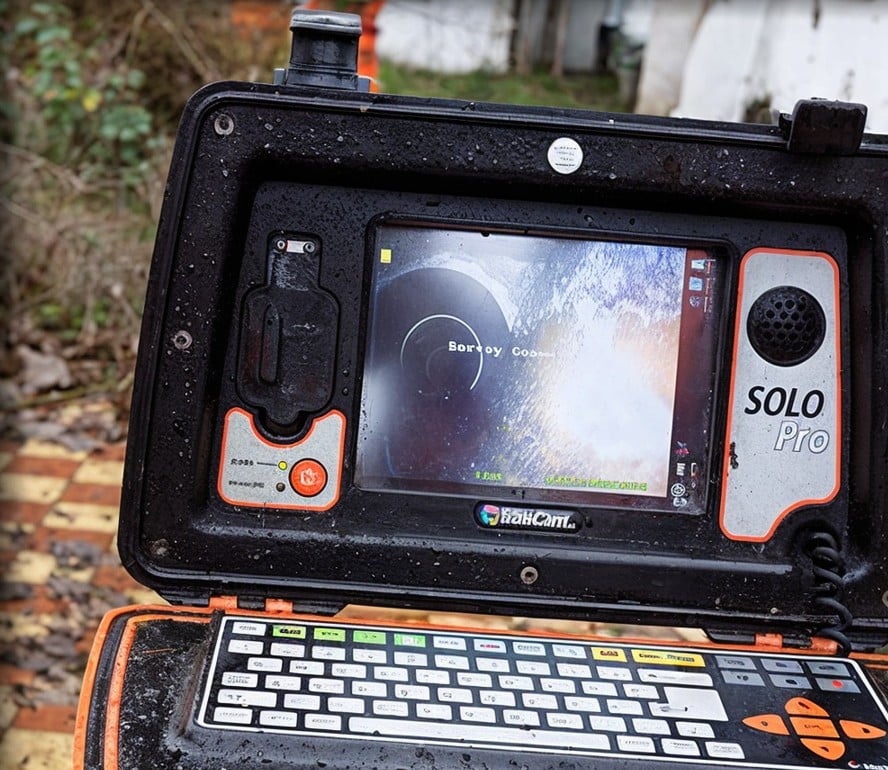
Before we cut anything, we inspect the pipe with a CCTV drain survey camera.
This shows us exactly where the root ingress is, how extensive the growth is, and what condition the pipe is in behind the roots. The survey determines whether root cutting alone will solve the problem or whether the pipe needs repair afterwards.
Step 2: Root cutting
We select the right cutting method based on what the survey shows.
For most jobs, we use robotic cutting equipment that enters the pipe through a manhole and is guided to the root mass using the CCTV camera feed. The cutting head uses high-speed rotation to cut roots cleanly, restoring the full pipe bore with minimal disruption.
For lighter root growth, high-pressure water jetting with specialist root cutting nozzles can be enough.
Step 3: Debris removal
Once the roots are cut, we flush the debris out of the system using high-pressure jetting.
This clears the cut root material, any trapped sediment that had accumulated behind the roots, and any loose debris from the pipe walls.
Step 4: Post-cutting CCTV verification
We run the camera through again to confirm the root mass has been fully removed and inspect the pipe condition. This is where we identify whether the pipe needs relining to prevent the roots returning.
You see the before and after footage yourself, so there’s no question about whether the job is complete.
Step 5: Report and recommendations
You receive a written report with the CCTV footage, findings, and our recommendations for preventing regrowth.
If the pipe needs relining or repair, we provide a quote for that work at the same time.
Root cutting methods
We use different specialist equipment depending on the severity of the root intrusion, the pipe diameter, and the pipe material.
Each cutting tool and method has its strengths, and we choose the right one for each job rather than applying the same approach everywhere.
Robotic cutting
Our remote-controlled robotic cutters are the most precise tool for cutting and root removal.
This root cutter removes roots cleanly without damaging the surrounding pipe wall, which is particularly important when the pipe is going to be relined afterwards. It’s effective on all pipe materials, including clay, concrete, cast iron, and plastic, and works on pipes from 100mm to over 600mm in diameter.
Robotic cutting also handles other obstructions that root ingress often causes.
Displaced lateral connections, intruding seals, grease buildup, and hardened scale deposits can all be removed in the same operation, preparing the pipe for drain relining in a single visit.
Mechanical cutting
For heavy root masses in larger diameter pipes, we use mechanical auger and chain-flail systems.
These are more aggressive than robotic cutters and use powerful rotation to break through dense, compacted root growth that has filled the entire pipe bore.
After mechanical cutting, we follow up with jetting to clean the pipe walls thoroughly.
High-pressure jetting with cutting nozzles
Specialist root cutting nozzles fitted to our jetting equipment combine the cutting power of rotating blades with the flushing action of high-pressure water.
Removing roots from drains is usually straightforward with this method when the growth is still manageable. This method works well for lighter root growth and fibrous roots that haven’t yet solidified into a dense mass.
Jetting with cutting nozzles is also useful for maintenance root control between major cutting visits, keeping regrowth in check before it becomes a blockage.
How to prevent root ingress returning
Root cutting removes the roots, but it doesn’t fix the crack, joint failure, or fracture that caused by root intrusion in the first place.
If the pipe damage is left as it is, roots will grow back.
The speed of regrowth depends on how close the tree is to the pipe and how large the opening is, but most roots return within 12 to 24 months if the entry point isn’t sealed.
Pipe relining
The most effective prevention. Relining seals every crack, joint, and fracture in the pipe from the inside, eliminating the entry points that roots exploit. A relined pipe is essentially a new pipe inside the old one, with no joints for roots to penetrate.
Scheduled maintenance cutting
If relining isn’t in the budget immediately, scheduled root cutting every 12 to 18 months keeps regrowth under control before it reaches blockage point. We include root cutting in our commercial maintenance contracts alongside jetting and CCTV monitoring, so the problem never gets the chance to escalate.
Tree management
For properties where the same trees repeatedly cause root ingress, consulting an arborist about root barriers, crown reduction, or selective removal can reduce the ongoing risk. We can advise on which trees are most likely causing the problem based on our CCTV findings and the direction of root growth in the pipe.

Why choose Clark Drainage for drain root cutting?
We’ve been removing roots from drains since 2005. Nearly two decades of experience means we’ve dealt with every type of root ingress, from a single tendril in a domestic pipe to industrial-scale root masses blocking large-diameter sewers.
CCTV before and after every job
We never cut blind. Every root cutting job starts with a CCTV survey to understand what we’re dealing with, and finishes with a second survey to verify the result. You see the footage and receive a written report.
Full range of cutting equipment
We carry robotic cutters, crown root cutter systems, mechanical rod-mounted cutting tools, and specialist jetting nozzles. Because we have every method available, we use what’s right for your pipe rather than defaulting to the one cutter we happen to own.
Root cutting plus permanent repair
Unlike companies that only cut roots, we also carry out drain lining and drain repairs. That means we can cut the roots and seal the pipe in the same visit, giving you a permanent fix instead of a temporary one. One company, one visit, problem solved.
Nationwide coverage
We have offices across the UK, from Glasgow and Edinburgh through Manchester, Birmingham, and Leeds to London and the south coast.
Find your nearest team via our local service centres.
Available 24/7
Root blockages don’t wait for office hours. We operate 24 hours a day, 7 days a week, 365 days a year. Our average emergency response time is one to two hours.
Fixed pricing
We quote before we start and stick to that price. No call-out fees during office hours. No hidden extras.
Book drain root cutting with Clark Drainage
Whether you need emergency root removal for a blocked drain right now or you want to schedule a planned root cutting visit as part of your preventative drain services, contact our experienced team and we will take it from there.
Give us a call on 0141 280 3431 or fill in the form below for your free, no-obligation quote.
